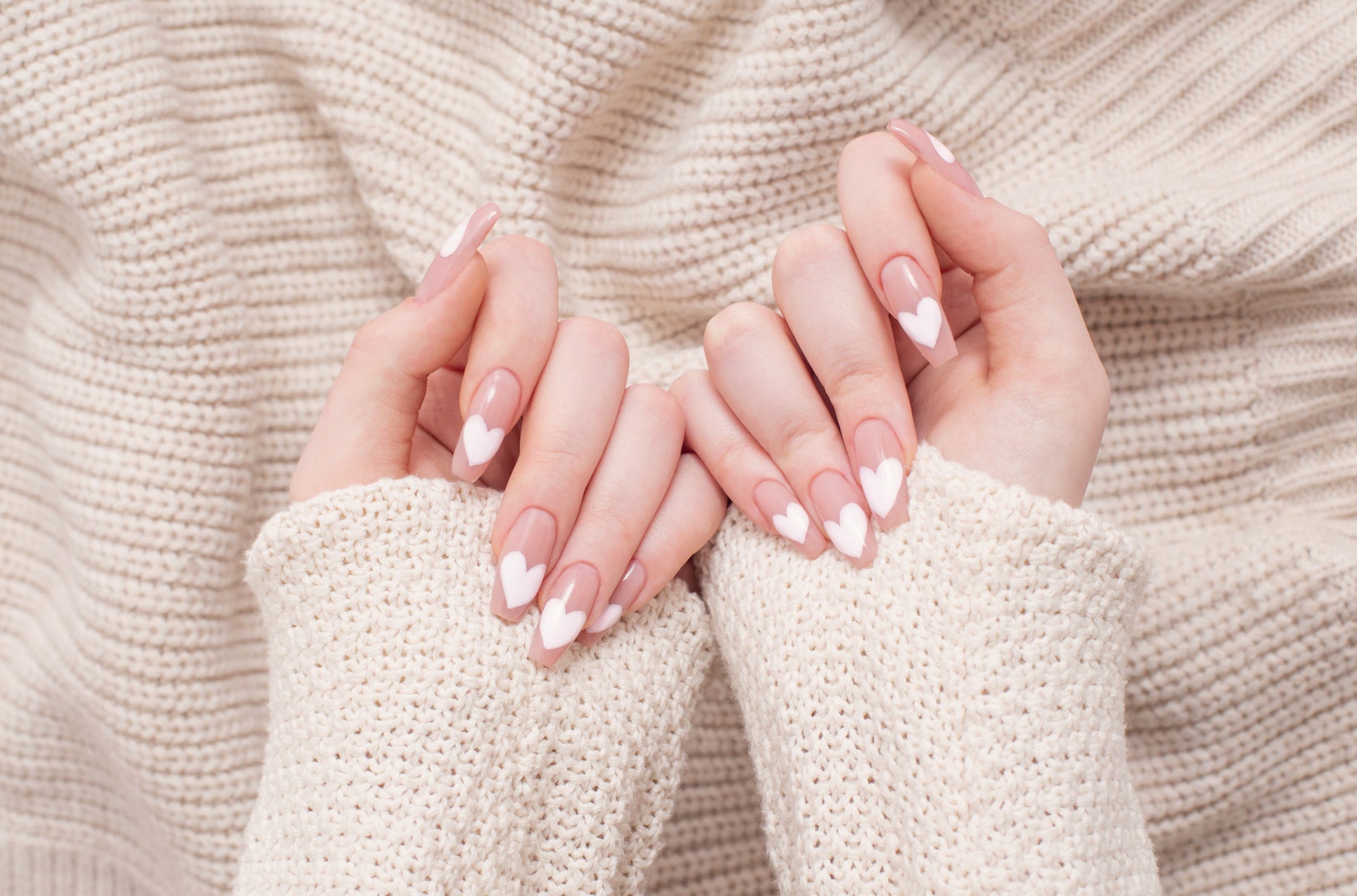


Quick answer: The main nail shapes are square, squoval, round, oval, almond, coffin (also called ballerina), stiletto and lipstick. Round, oval and squoval are the most practical, because they have no sharp corners or fine points to snag or break, and they suit short nails. Almond is the most popular longer shape, as it flatters most hands while staying fairly strong. Coffin and stiletto are statement shapes that need length, and usually extensions. If you have short nails, choose round, squoval or a soft oval. If you want your fingers to look longer, choose oval or almond.
Nail shapes chart
| Shape | What it looks like | Best length | Practicality | Best for |
|---|---|---|---|---|
| Square | Straight sides, flat tip, sharp corners | Short to medium | High, but corners can snag | Long, narrow nail beds; a clean, classic look |
| Squoval | Square with softly rounded corners | Short to medium | Very high | Almost everyone; the easiest shape to wear day to day |
| Round | Straight sides, evenly curved tip that follows the fingertip | Short | Very high | Short nails, nails that break easily, active hands |
| Oval | Rounded tip, slightly narrower than the nail bed | Short to medium | High | Making fingers look longer and slimmer |
| Almond | Slim sides tapering to a soft, rounded point | Medium to long | Medium | An elegant, elongated look that suits most hands |
| Coffin (ballerina) | Tapered sides with a flat, squared-off tip | Long | Low to medium | Statement nails, usually with extensions |
| Stiletto | Long, tapered sides meeting in a sharp point | Long | Low | Dramatic, high-impact nails with extensions |
| Lipstick | A slanted tip, like a new lipstick | Medium to long | Medium | Something different; can be filed on natural nails |
Every nail shape explained
Square nails

Square nails have straight sides and a flat tip with crisp corners. They are a classic, clean shape and work well at short to medium length. Because the full width of the nail goes all the way to the tip, square nails are strong, but the sharp corners can catch on clothes and hair. Square suits long, narrow nail beds. On short or wide nails it can make fingers look shorter.
How to file: file straight across the tip in one direction, then file each side straight up so the sides are parallel. Keep the corners sharp.
Squoval nails
Squoval (square plus oval) is a square nail with the corners softened. It keeps the strength of a square tip without the snagging, which makes it one of the most practical, low-maintenance shapes there is, and one of the most popular for natural nails, gel polish and BIAB.
How to file: file a square shape first, then gently round off each corner with a few light strokes.
Round nails

Round nails have straight sides and a tip that curves evenly, following the shape of the fingertip. They are the go-to shape for short nails, for anyone whose nails break easily, and for people who use their hands a lot, because there are no corners or points to catch. Round is also the easiest shape to keep up while you grow your nails.
How to file: keep the sides straight and file the tip in a smooth curve from each side towards the centre.
Oval nails

Oval nails have a rounded tip that is a little narrower than the nail bed, so the nail looks like an egg. The shape draws the eye lengthways, which makes fingers look longer and slimmer. Oval works at short to medium length and is a good middle ground between round and almond.
How to file: file the sides in slightly towards the tip, then round the tip in a smooth curve. Take care not to file too far into the sides, as this weakens the nail.
Almond nails

Almond nails have slim, tapered sides that meet in a soft, rounded point, like the nut. Almond is one of the most searched-for nail shapes because it flatters almost every hand and looks elegant at medium to long length. It is stronger than stiletto, because the tip is rounded rather than sharp, but the narrowed sides make it less sturdy than oval or squoval on weak natural nails.
How to file: file each side in at an angle towards the centre of the tip, then soften the point into a rounded peak. Check from above that both sides match.
Coffin (ballerina) nails

Coffin nails, also called ballerina nails, have tapered sides like an almond but finish in a flat, squared-off tip, like a ballet pointe shoe. It is a bold shape that needs length to look right, so it is usually done with extensions. The narrow, flat tip is more prone to breaking than rounded shapes.
How to file: taper both sides in towards the tip as you would for a stiletto, then file straight across to create a flat tip.
Stiletto nails

Stiletto nails are long and taper to a sharp point. They are the most dramatic shape, and the least practical: the point makes typing, putting in contact lenses and many everyday tasks harder, and it is the most likely to break. Stiletto almost always needs extensions for the length and strength it relies on.
How to file: file each side in at a steep angle until they meet in a point at the centre of the tip.
Lipstick nails
Lipstick nails have a tip filed at a slant, like the angled tip of a new lipstick. It is a fun, slightly unusual shape that can be filed on natural nails at medium length. Expect it to need more frequent reshaping as the nail grows.
How to file: file the tip at a diagonal, either from left to right or right to left, keeping the angle the same on every nail.
How to choose the right nail shape
For short nails
Round, squoval and soft oval are the best shapes for short nails. They look neat at any length, and oval in particular makes short nails and fingers look longer. Shapes that rely on length, such as coffin and stiletto, don't work on short nails.
For weak nails, or nails that break easily
Choose round, oval or squoval. Sharp corners and narrow points concentrate pressure at the tip, which makes breaks more likely. A strengthening layer of BIAB also helps weak nails hold their shape while they grow. See BIAB nails at home.
For your hand and nail bed shape
-
Short fingers or wide nail beds: oval or almond, which draw the eye lengthways and make fingers look longer.
-
Long, slim fingers or narrow nail beds: almost anything works. Square and squoval look especially good.
- Not sure? Match the shape of your cuticle. A rounded cuticle usually suits a rounded tip (round, oval, almond), and a squarer cuticle suits squoval or square.
For your lifestyle
If you type a lot, work with your hands, play sport or have young children, round, squoval or short oval will be the most comfortable and the least likely to break. Almond is a good choice if you want something more elegant that still holds up day to day. Save coffin and stiletto for when you're happy to be a little more careful with your nails.
Which nail shapes work with gel, BIAB and builder gel?
Gel polish follows the shape of your natural nail, so file your shape before you start. Every shape works, as long as your nails are long enough for it. See how to do gel nails at home.
BIAB suits natural to medium-length shapes: round, oval, squoval, square and soft almond. BIAB can also add short to medium length over a nail form or tip. Read BIAB extensions vs overlay.
Builder gel is the better choice for long or sculpted shapes such as long almond, coffin and stiletto, because it is firmer and gives you more control over structure. See how to apply builder gel at home.
How to file your nails into any shape
-
Start with clean, dry nails. Wet nails are softer and more likely to split or peel when filed.
-
Use the right grit. A fine 180/240 file is best for natural nails. Coarser grits are for shaping enhancements. Our guide to nail file grits explains which to use.
-
File in one direction, from the side of the nail towards the centre, rather than sawing back and forth, which can cause splitting.
-
Shape the tip first, then the sides, and don't file deep into the side walls, as this weakens the nail.
-
Check from every angle. Look down at the nail, then turn your hand over and look from the fingertip side to make sure every nail matches.
- Smooth the edge with a light pass of a buffer and finish with cuticle oil.
Find professional files in every grit, plus buffers and an electric nail file, in our nail files collection.
Frequently asked questions
What are the different nail shapes?
The main nail shapes are square, squoval, round, oval, almond, coffin (ballerina), stiletto and lipstick.
What is the most popular nail shape?
Almond is one of the most searched-for nail shapes, along with coffin and squoval. For everyday natural nails, squoval and oval are among the most commonly worn because they are practical and flattering.
What is the strongest nail shape?
Round, squoval and oval are the strongest, because they keep the width of the nail at the tip and have no sharp corners or points to break.
What is the best nail shape for short nails?
Round, squoval or a soft oval. Oval makes short nails and fingers look longer.
What nail shape makes fingers look longer?
Oval and almond, because the tapered tip draws the eye lengthways.
What is the difference between coffin and ballerina nails?
There is no difference. Coffin and ballerina are two names for the same shape: tapered sides with a flat, squared-off tip.
What is the difference between square and squoval nails?
Square nails have sharp corners. Squoval nails are square with the corners softened, so they snag less and are more comfortable to wear.
What is the difference between almond and oval nails?
Oval nails have an evenly rounded tip. Almond nails have slimmer sides that taper to a soft point, and usually need a little more length.
Can you do almond or coffin nails on short nails?
A soft almond can work on short to medium nails. Coffin needs length to keep its shape, so it is usually done with extensions using builder gel or BIAB over tips.